In late 2025, I built and launched a two-sided marketplace MVP for local pop-up markets in under 4 weeks. 224 active users, 1.8K tracked events, zero paid acquisition.
Then I paused it.
Not because it failed, but because it worked just enough to show me the real problem I hadn't solved yet.
What the MVP Got Right
The original STOA was vendor-first. The pitch: one place to discover and apply to local craft fairs and farmers markets instead of digging through Instagram captions and chasing DMs.
I built a structured directory of 100+ markets using Airtable and Softr, used LLMs to convert unformatted social posts into normalized listings, and launched with no marketing budget.
The signal was real. Vendors showed up and used it. Average session was 31 seconds, not long, but engaged. The discovery problem was genuine.
But retention was low. And when I dug into why, the answer was obvious in hindsight.
The Part I Got Wrong
Vendor discovery only works if the listings are accurate and current. And listings stay accurate only if organizers have a reason to keep them that way.
I assumed that once vendors arrived, organizers would follow. That's not how two-sided marketplaces work. You can't pull supply with demand alone, not when the supply side (organizers) has zero operational reason to be on the platform.
Most market organizers run everything through Gmail, Google Forms, and spreadsheets. They manually copy vendor info from form submissions, send individual approval emails one at a time, and chase Venmo payments by hand. It's tedious, error-prone, and time-consuming.
That's the actual problem worth solving. And it has nothing to do with vendor discovery.
What I Built Next
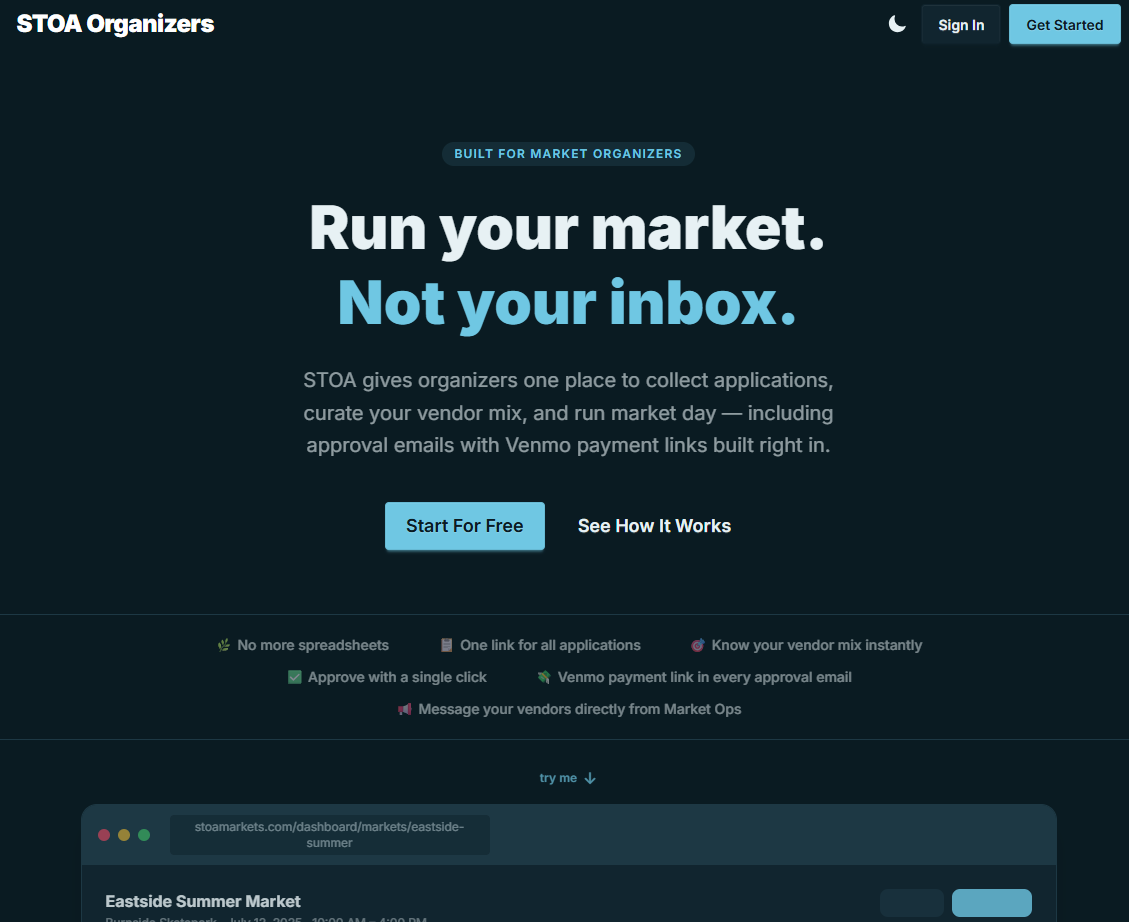
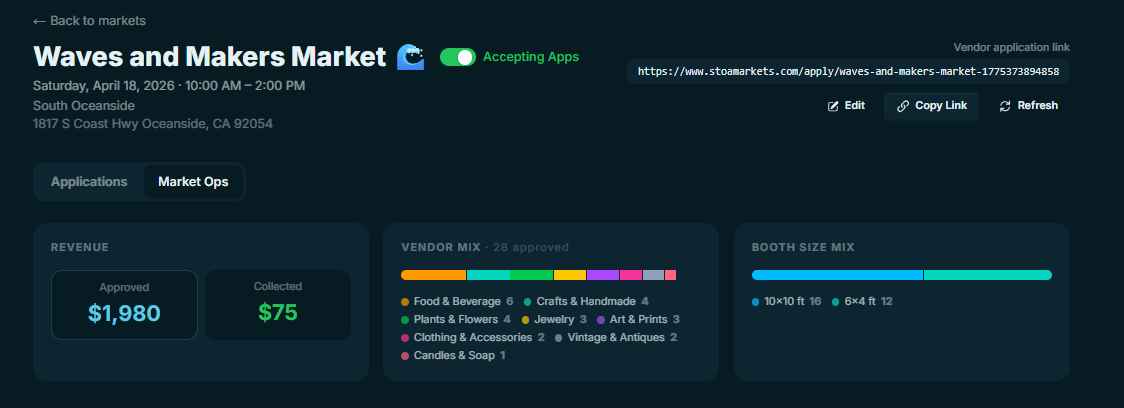
STOA is a vendor management platform for makers' markets and farmers' market organizers. Organizers create a market in minutes, share a branded application link, and review incoming vendor applications through a dashboard with filtering, bulk actions, and one-click approval emails with deep-linked Venmo payment links so vendors pay in a single click. Analytics show vendor mix by category, booth size distribution, and estimated revenue in real time.
Built solo from 0 to production. Stack: Next.js 15, TypeScript, MongoDB, Resend, NextAuth, Vercel. Live and in active use with real organizers in Southern California.
Why This Order Makes Sense Now
When organizers have a tool that makes their job meaningfully easier, they bring their markets. And when markets are on the platform, vendor discovery becomes a pull effect, not something you have to manufacture.
v1 taught me that. I had to build the wrong thing first to understand which side of the marketplace was actually load-bearing.
Now I know. That's the version that's live today.
STOA is still live at stoamarkets.com, though active development is currently paused while I focus on other projects. If you run a market and want to try it, get started for free.